
Loading
Loading
Brass
61 years engineering brass and bronze alloy castings for the most demanding industries — a nearshoring partner for the United States, Canada and Mexico with USMCA-compliant supply. Red brass, tin bronze, aluminum bronze, manganese bronze, silicon bronze and lead-free alloys, produced and machined under one roof.
Typical parts include valve bodies, pipe fittings, pump housings, bushings, and plumbing components.
Casting Weight Range
Supplied as-cast or fully CNC-machined
%2FBrass-Cam-Groove-Couplings.webp&w=1920&q=90)
Materials
Red Brass
Traditional leaded red brass for general-purpose valve bodies, pump casings and plumbing fittings.
Semi-Red Brass
Leaded semi-red brass for plumbing fittings, valve bodies and pump impellers.
Tin Bronze
Copper-tin alloys for high-load bearings, gears, valve stems and steam-service components.
Aluminum Bronze
Copper-aluminum alloys with outstanding strength and seawater corrosion resistance — propellers, marine hardware, offshore valves.
Manganese Bronze
High-tensile copper-zinc alloys (high-strength yellow brass) for heavy-duty gears, marine winches and deck hardware.
Silicon Bronze
High-strength, lead-free copper-silicon alloys for marine, chemical and water-service valves, pumps and bushings.
Custom Brass & Bronze Alloys
Customer-specified and proprietary brass and bronze alloy compositions. Each request is reviewed and validated by our engineering team before quoting.
Typical Industries
Manufacturing Process
The client provides the product design. Fimex engineers how to cast it with in-house CAD/CAM using SolidWorks, PowerSHAPE, and PowerMill for pattern development and mold design. Wood, resin, or metal patterns fabricated to spec. Casting simulation with SolidCast to optimize geometry, predict shrinkage, and minimize defects before production.
Complex cores manufactured using two systems: Hot Box and Cold Box. Ceramic and silica sand cores ensure accurate internal channels and cavities, even for highly intricate geometries.
Two molding processes for brass and bronze: Green Sand and Permanent Mold. Each method selected to optimize part quality, dimensional accuracy, and output for brass and bronze alloys.
Induction furnaces for brass and bronze alloys. With varied casting processes: Standard, Gravity, and Low-Pressure (Permanent Mold). Chemical analysis per heat ensures precise alloy composition. Controlled pouring temperature and speed for optimal casting integrity and traceability.
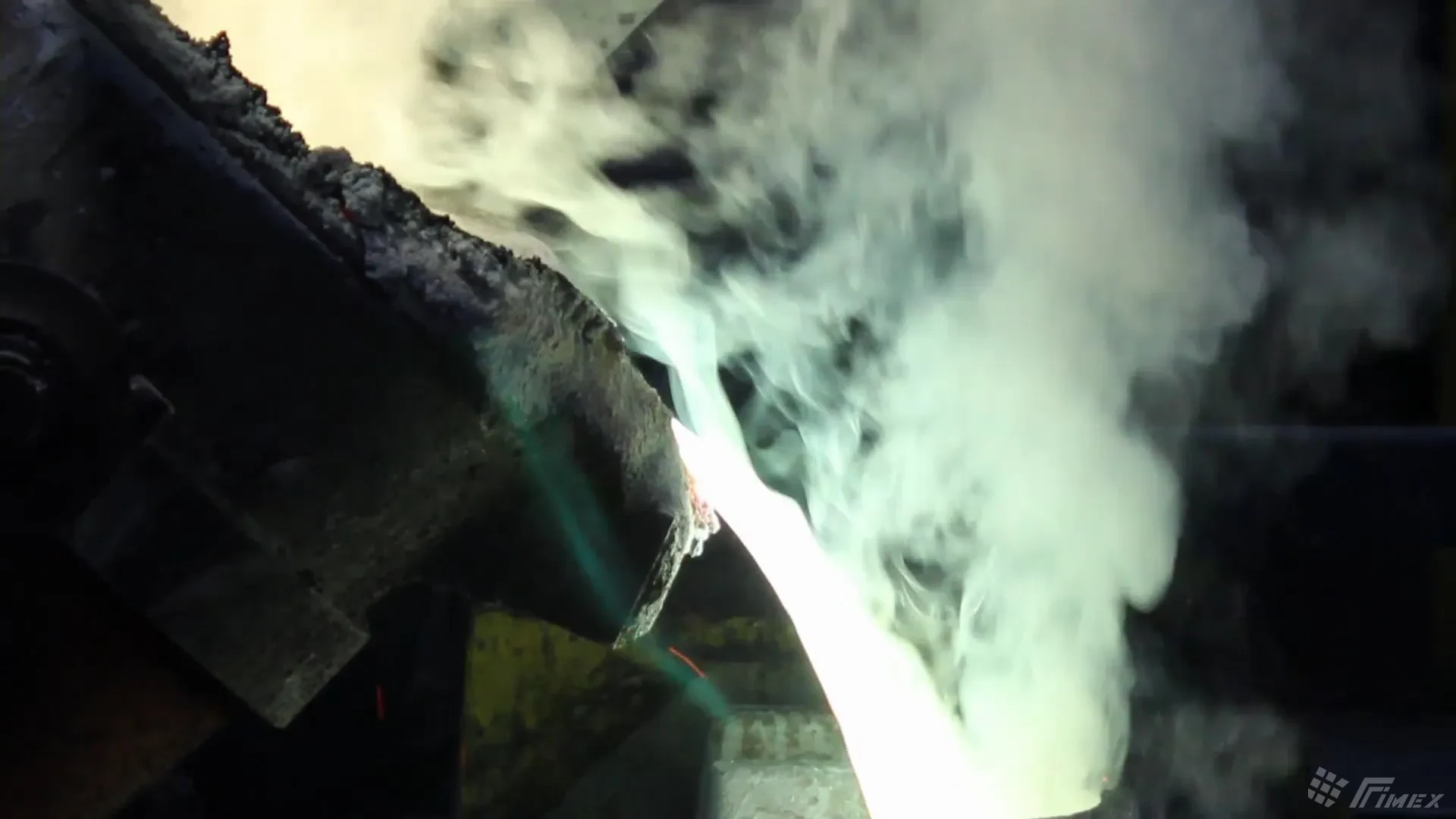
Controlled cooling rates to achieve target microstructure and mechanical properties. Sand separation and reclamation systems minimize waste and ensure sand quality for reuse in subsequent production cycles.
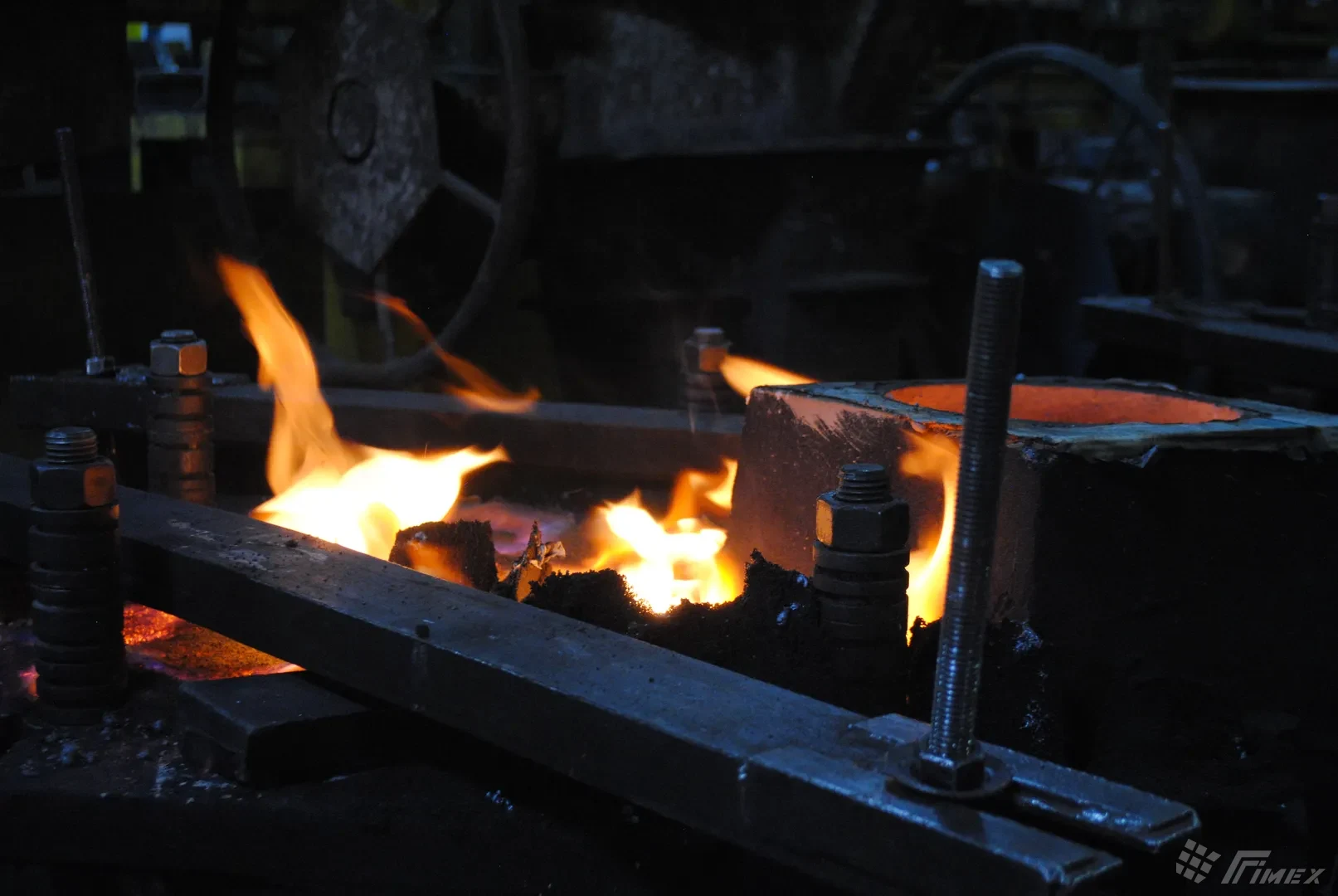
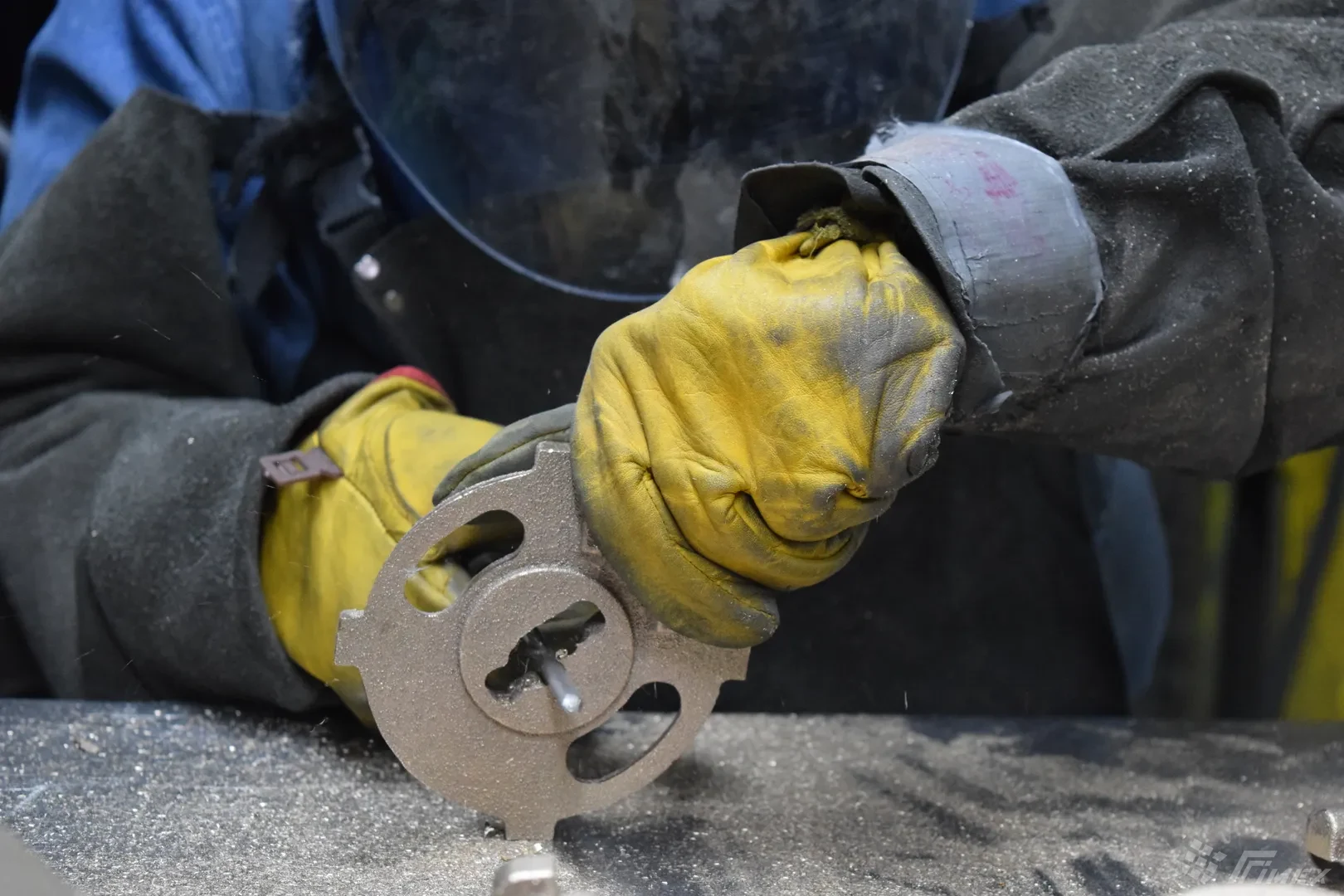
Grinding, shot blasting, and robotic polishing cells remove gates, risers, and surface imperfections. Parts inspected before advancing to machining.
Dedicated brass machining floor (NEW 2024-2026): CNC machining centers, lathes, and cobots (robotic arms). Purpose-built for brass and bronze alloy families with the latest technology.
Dedicated assembly area for final part integration. Components are assembled, and valves undergo pressure and leak testing to ensure compliance with customer specifications.
Full dimensional, metallurgical, and NDT inspection per customer specifications. Destructive testing (Charpy impact, tension/tensile, cross-section cuts). Non-destructive: ultrasonic, liquid penetrant, magnetic particle, radiographic, hardness, chemical analysis, dimensional, visual, leak testing, and pressure testing. 3D scanning for reverse engineering and dimensional verification. Every brass and bronze part is verified before shipment.
Independent Process
Fimex offers closed-die forging for brass alloys, producing parts ranging from 0.200 kg to 1.300 kg. This process delivers superior mechanical properties through controlled deformation of heated metal.
Forging produces parts with enhanced grain structure, higher strength, and better fatigue resistance compared to cast equivalents — ideal for components requiring maximum structural integrity.
Closed-die forging
Brass alloys
0.200 kg to 1.300 kg part range
Superior mechanical properties
Enhanced grain structure
Process Strengths
Two processes: Green Sand Casting · Permanent Mold. The right method selected for each brass and bronze alloy, geometry, and volume requirement.
Dedicated brass machining floor (NEW 2024-2026): CNC machining centers, lathes, and cobots (robotic arms). Purpose-built for brass and bronze alloy families with the latest technology.
Closed-die forging for brass alloys. Parts from 0.200 kg to 1.300 kg with superior mechanical properties, enhanced grain structure, and higher fatigue resistance.
Share your specs with our engineering team. Custom brass and bronze alloys and low-to-medium volume production.